CAD for manufacturing on its own exact kernel
Monge builds exact models of equipment and parts — from dimensions, from a drawing or from a description for the AI — and prepares the files for the shop: flat patterns, drawings, STEP. The program is in development; below is what already works and how we test it.
Now: in development. Monge cannot be downloaded yet.
What Monge looks like today
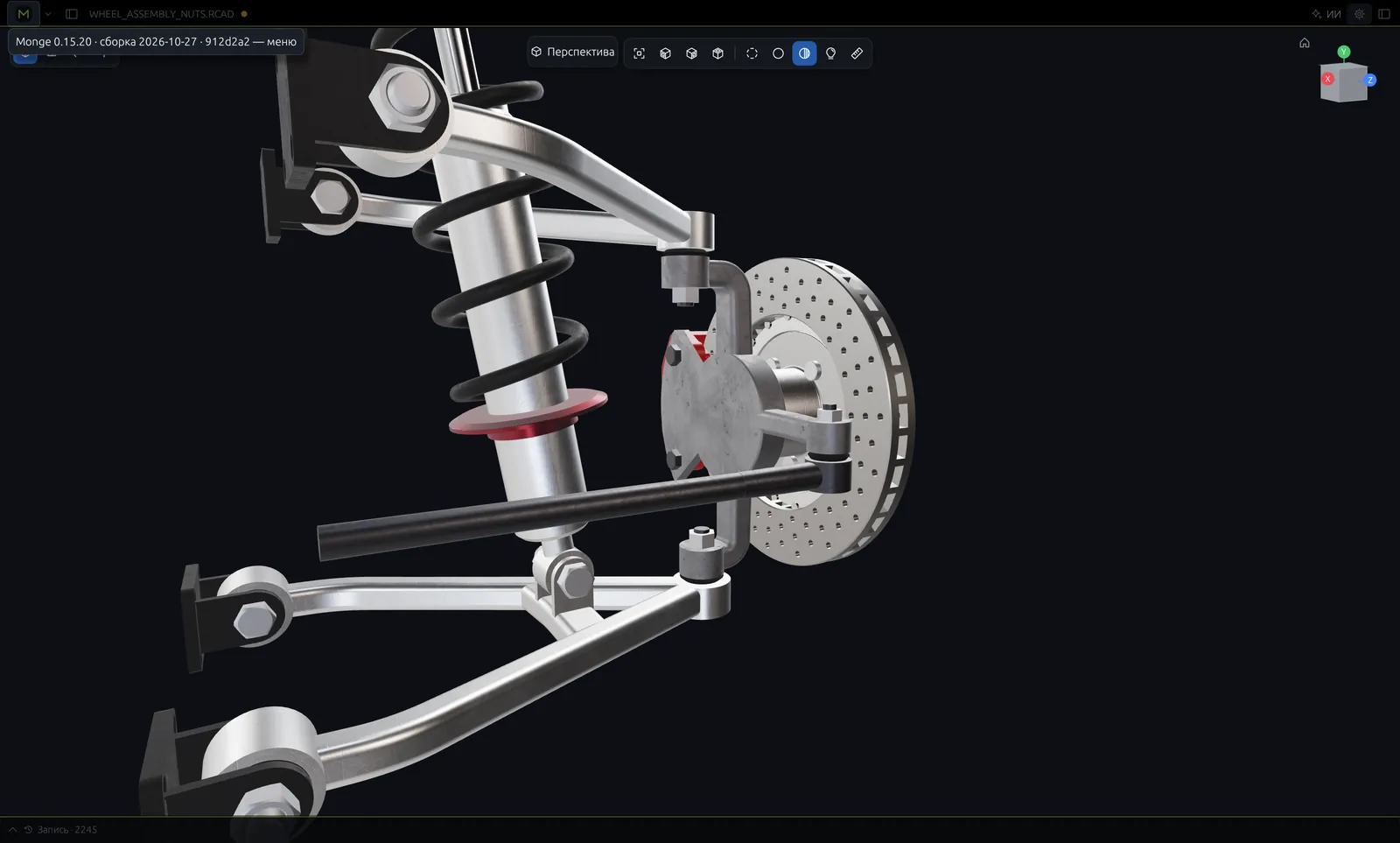
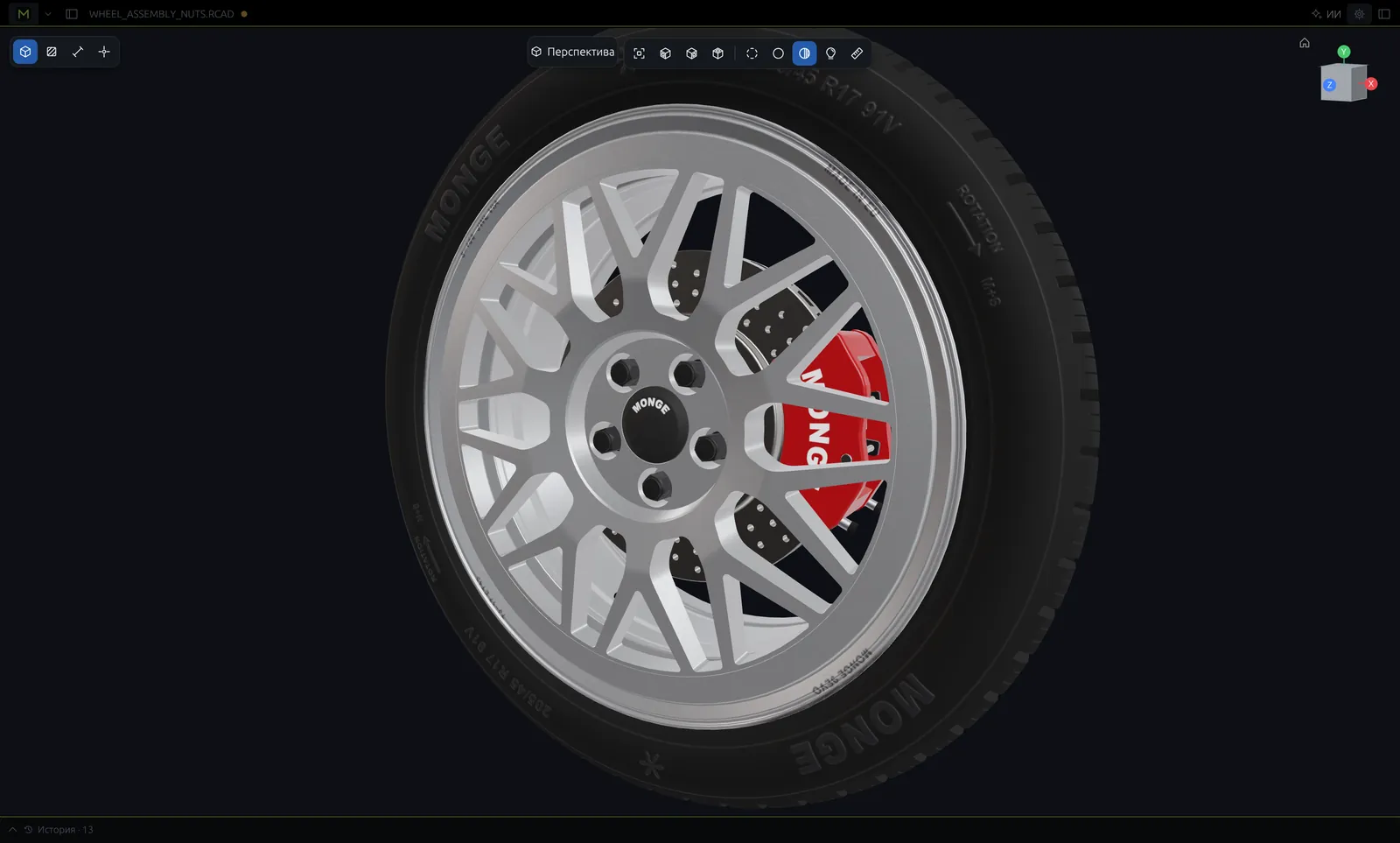
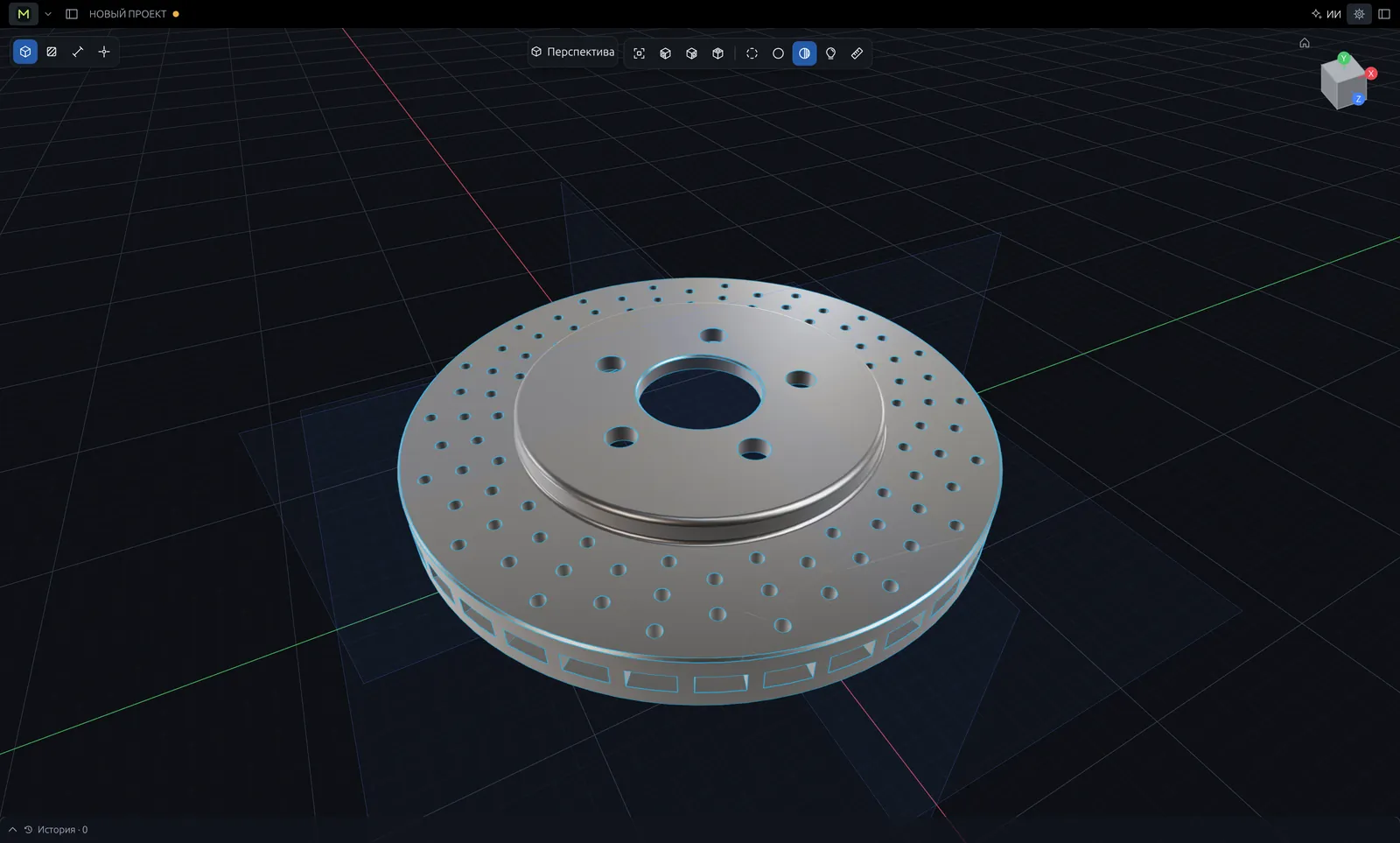
A video about the project, screenshots of the program window (version 0.15.20, October 2026) and frames of films computed by Monge’s own physics (version 0.15.145, November 2026). A working build, not a mock-up.
Why I am building Monge, how AI helps me develop it and how the program makes real models and assemblies. Version 0.12.1, 13 October 2026.
Open on YouTubeThe video loads from YouTube only after you press play.



What Monge is for
For people who design and make things — from a stainless table to an assembly of hundreds of parts.
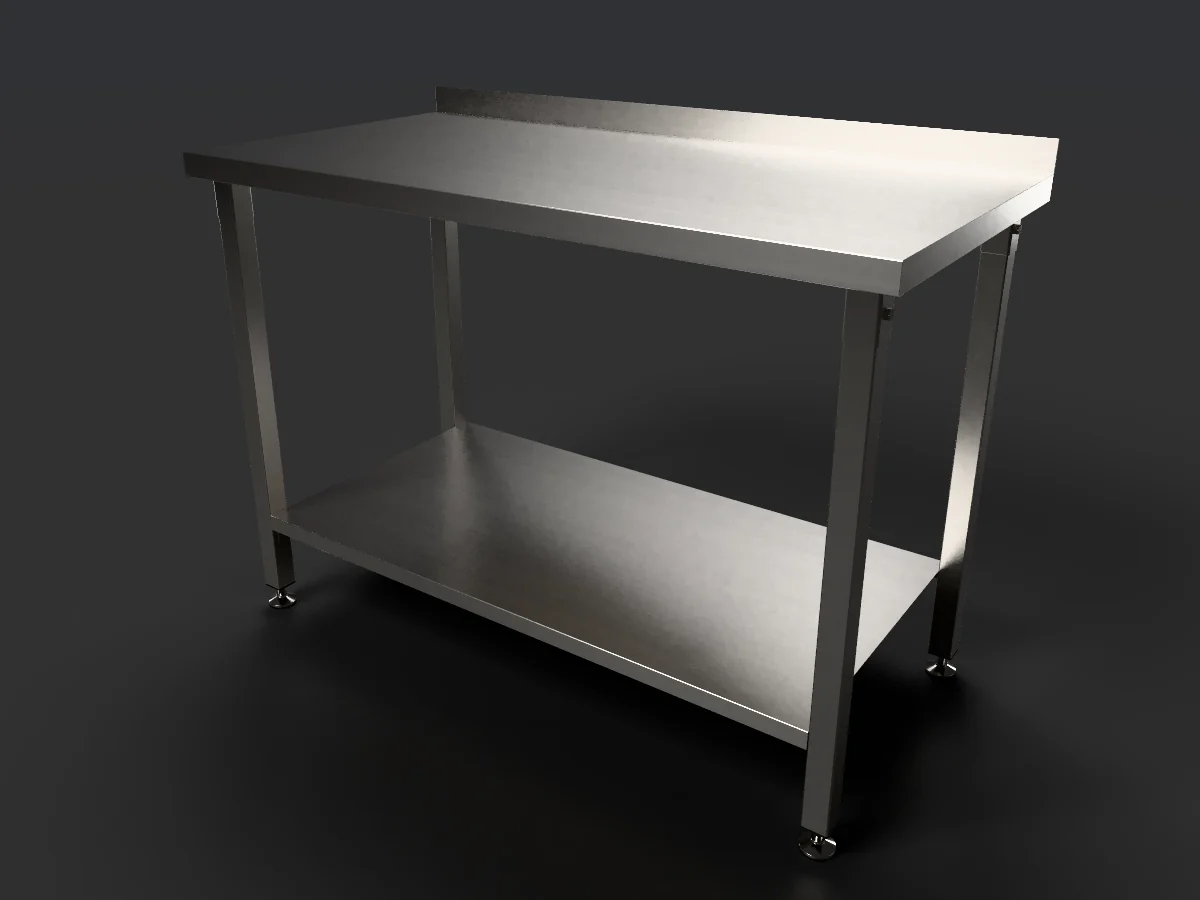
Stainless equipment
Tables, sinks, shelving and chambers for food production: a product from its dimensions, sheet metal with bends, DXF flat patterns for laser cutting, a bill of materials and the mass.
Parts and assemblies
Parametric parts from the library, assembled by their mounting points. Select a part, name a dimension — it is rebuilt in place and the mates are checked.
Products from words, and AI
Monge’s built-in assistant understands a task in plain words and builds it itself, offline. An external AI can be connected: it builds from a description or a drawing with the same tools a person uses. Every step is visible and every step can be undone.
Drawings and shop files
ISO drawings with views, sections and a parts list in PDF and DXF, DXF for CNC, STEP AP214 for any CAD system.
Photos and videos
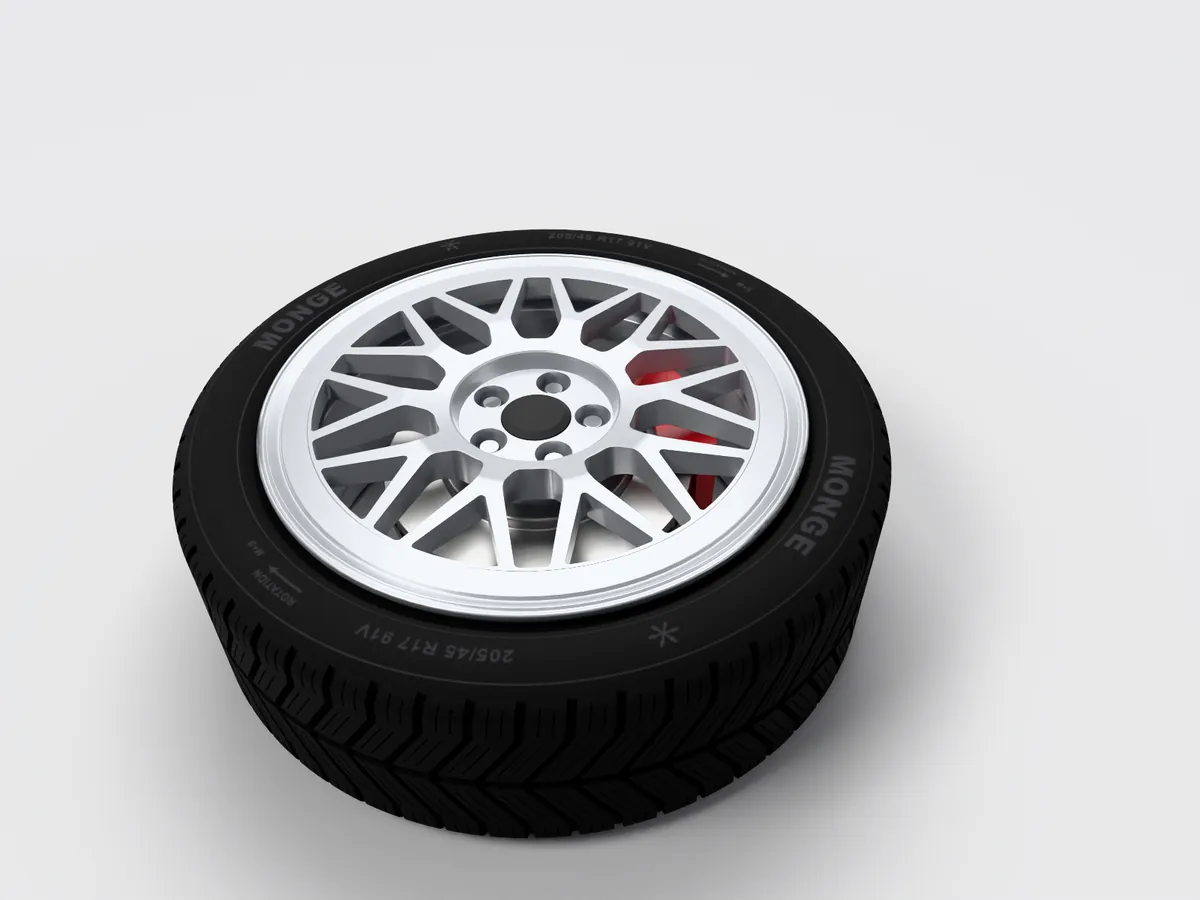
Photo renders on the Mac’s GPU and 16:9 or 9:16 videos — for quotes and social media. Motion in a film is computed by Monge’s own physics: bodies, cloth, hair, brushes.
Organic shapes and characters
Sculpting with brushes in the same window as exact parts, and people with poses and hair — for scenes and films next to the product.
Its own kernel. Closed source.
Geometry in Monge is computed by its own B-Rep kernel, written from scratch in Rust. Not a mesh of triangles but exact surfaces, so the model is ready for a drawing, STEP and the machine.
- Surfaces
- Plane, cylinder, cone, sphere, torus, NURBS.
- Operations
- Booleans of curved solids, rolling-ball fillets — variable-radius and smooth G2, shells, lofts, surfaces from a curve network, exact mirroring.
- Code
- About 100,000 lines of Rust. The only third-party libraries in the kernel are for serialisation and logging.
- Rights
- Closed source, all rights reserved. There is no code from other geometry kernels in Monge.
- Testing
- 1,250 automated tests after every change to the kernel.
Kernel test protocol
Results of the kernel exam of 25 Oct 2026, of November’s measurements of large scenes and physics, and of the full daily check. Machine: MacBook Air M4, 24 GB. Where the kernel does not cope yet, we say so.
1,250tests pass on every change; 0 failed, the whole check takes 99 s
174kernel failures from real work fixed and replayed on every check
134cases saved and waiting to be analysed: 56 fillets and chamfers, 40 Booleans, 38 other operations
- 400×400×10 plate with 1024 Ø5 holes — 1030 facespassed
Built, then every hole changed Ø5 → Ø6; a valid solid
Time: 674 / 681 msMemory: 674 MB
- Stitching 216 curved NURBS surfaces into a solidpassed
Built and stitched; gap 2·10⁻¹³ mm, no open edges
Time: 470 + 500 msMemory: 142 MB
- A 6 m boat hull from 25 sectionspassed
Smooth surface built (the previous version refused)
Time: 1.8–2.1 s
- Rebuilding a part’s history after changing dimensionspassed
All 7 steps recomputed, the volume is right
Time: 67 ms
- STEP AP214 write and readpassed
Faces, edges, vertices and volume match the original
- A Boolean on the cast wheel (562 faces)passed
A valid solid
Time: 200–700 ms
- The AI builds a part from a descriptionpassed
21 commands; one kernel refusal — the AI fixed it itself
- Filleting all 69 edges of the cast faucet with one command, R1passed
A valid solid (refused at any radius before)
- A pattern of 99,960 identical bodies — hexagonal tubespassed
One exact shape and 99,960 placements; the window orbits the scene
Time: 360 msMemory: 900 MB
- A 1080×1920 photo of that scene in Monge Renderpassed
One mesh and a place per body on the GPU (crashed at 7 GB before)
Time: 10 sMemory: 1,700 MB
- A project of 99,960 bodies: the file and opening itpassed
A 2.1 MB file; the Time column is opening it
Time: 3 s
- Physics: a brush of 1,000 elastic bristles falls through four rings, 1.4 spassed
The bristles bend and slow the brush; the Time column is the computation
Time: 2.5 s
- Chamfering every edge over filletsnot passed
Works on a plain block; still refused on a part with a wall and holes
Kernel tests run on the exact geometry; heavy ones in separate processes with a 600 s limit and peak memory measured. The kernel exam: Monge 0.15.4; the faucet: 0.15.143; the scene of 99,960 bodies: 0.15.144; physics and the full check: 0.15.145.
Where we are
- Stage
- Development. Real products are already built in the program, but it cannot be downloaded yet.
- Beta
- Closed, for testers — once fillets on complex corners are solid. No date yet: we will give one when we are sure.
- Platforms
- Mac with Apple Silicon first, then Windows.
Development log
| Date | Version | What was done |
|---|---|---|
| Early 2026 | — | Work started on its own B-Rep kernel in Rust. |
| May 2026 | — | The program window: solids, move and rotate, a GPU 3D view. |
| July 2026 | — | A unified materials engine. |
| 5–7 Oct 20260.3 | 0.3 | The first stainless products — a table and a sink; a model library with 3D in the browser. |
| 8–9 Oct 2026 | — | Kernel exams: a sink with a faucet — 13 of 13, a faucet as one casting — 8 of 8. The kernel’s failure memory. |
| 19 Oct 20260.15 | 0.15 | Direct face editing (Push/Pull) and one mechanism for all operations. |
| 25 Oct 20260.15.4 | 0.15.4 | A 10-test kernel exam: stitching 216 surfaces, 1030 faces, STEP, AI. |
| 26–27 Oct 20260.15.20 | 0.15.20 | Surfaces from a curve network, exact mirroring, engraving on the rim, an assembly of two wheels with suspension — 229 bodies. |
| 28 Oct 20260.15.20 | 0.15.20 | Editing by selection: select the control arm, name a length — it is rebuilt and the mates are checked. 166 saved kernel failures confirmed fixed. |
| 29 Oct – 1 Nov 20260.15.39 | 0.15.39 | Comparing a scan with the model; large scenes: one exact shape, many placements; materials as a graph, engineering properties apart from the look. |
| 1–2 Nov 20260.15.79 | 0.15.79 | One screen: the chat on the left, the model on the right. Monge Studio — a product from words, with no external AI. |
| 3–6 Nov 20260.15.131 | 0.15.131 | Sculpting organic shapes with brushes; people with a skeleton, poses, skin and hair; jointed characters. |
| 8–9 Nov 20260.15.145 | 0.15.145 | Variable-radius and G2 fillets, the cast faucet filleted whole; gears and fasteners; scenes of 100,000 bodies; a test bench for Monge Render. |
| 10–11 Nov 20260.15.145 | 0.15.145 | Monge Physics — its own physics kernel: rigid bodies, joints, cloth, hair and brushes in one world; a film changes a body’s shape; bristle materials in the library. |
Next
- Fillets and chamfers on complex corners (56 saved cases), and Booleans with a sphere
- Physics: cloth on a character, destruction, smoke and fire
- Editing by selection for the whole suspension, and its kinematics
- A closed beta for testers
- A Windows version
- A model library for production, and a subscription
Developer
Dmytro Fomin
Chef and food production technologist. Gdańsk, Poland.
More than 20 years in kitchens and food production in Poland, Lithuania, Estonia, Germany, France and Canada: product development, quality control, HACCP, training teams. He knows the production floor from the inside — so he builds CAD for the people who make its equipment. Monge has been his own project since early 2026.
Join the beta list
Leave your name and email — we will write when the closed beta opens. Only what matters: the beta and major updates.
Or message me directly
Questions
When can I download Monge?
Not yet: Monge is in development. First we will open a closed beta for testers — once fillets on complex corners are solid. We will give a date when we are sure; join the list and you will hear first.
How much will it cost?
Prices will be announced at release. We plan a monthly subscription.
Which computers will it run on?
The Mac version with Apple Silicon (M1–M4) comes first. Windows later.
Is the kernel its own or licensed?
Its own. The B-Rep kernel was written from scratch in Rust; the code is closed and all rights are reserved. There are no third-party geometry kernels inside.
Will models open in SolidWorks, Fusion or FreeCAD?
Monge writes and reads STEP AP214 with exact geometry, which every major CAD system accepts.
How does the AI work in Monge?
Monge has its own assistant: it understands a task in plain words and builds it itself, offline and with no external AI. An external AI can be connected through the open MCP protocol — it drives the program with the same tools a person uses. Every step shows in the history and in the build recording, and any step can be undone.
Where are my models stored?
On your computer. Only what you publish to the library yourself goes to the cloud.