Japanese Ingredients Decoded: A Chef's Guide to the Products That Define the Cuisine
Even the most accomplished Western chef walks into a Japanese grocery store and draws a blank. Agar-agar, wakame, wasabi, sesame, azuki — each demands its own logic. Mastering these raw materials is what separates cooking Japanese food from actually understanding it.

Picture an experienced chef — someone fully at home in European cuisine, capable of working with French classics or Italian cuisine almost intuitively. And yet, walking into a Japanese grocery store for the first time, he picks up packages, examines jars, tries to make sense of the labels, sniffs — and still remains at a loss. Most products on the shelves are unfamiliar to him. The issue here isn't the level of skill. It's the system of products he has never encountered before.
The real challenge in learning Japanese cuisine isn't mastering the cooking methods — frying, simmering, and grilling look roughly the same everywhere. The real difficulty begins earlier — at the stage of selecting and understanding ingredients. It is precisely the ability to recognize a product and know its properties that separates someone who simply "cooks Japanese dishes" from a professional working within its gastronomic logic.
In Japanese cuisine, the product is not a raw material to be transformed — it is the starting point of every decision. The better you understand it, the less you need to do to it. This is the inverse of classical French logic, where technique can compensate for mediocre ingredients. In the Japanese framework, there is nowhere to hide.
1. Agar-Agar (Kanten): A Plant-Based Gelling Agent That Rewrites the Rules
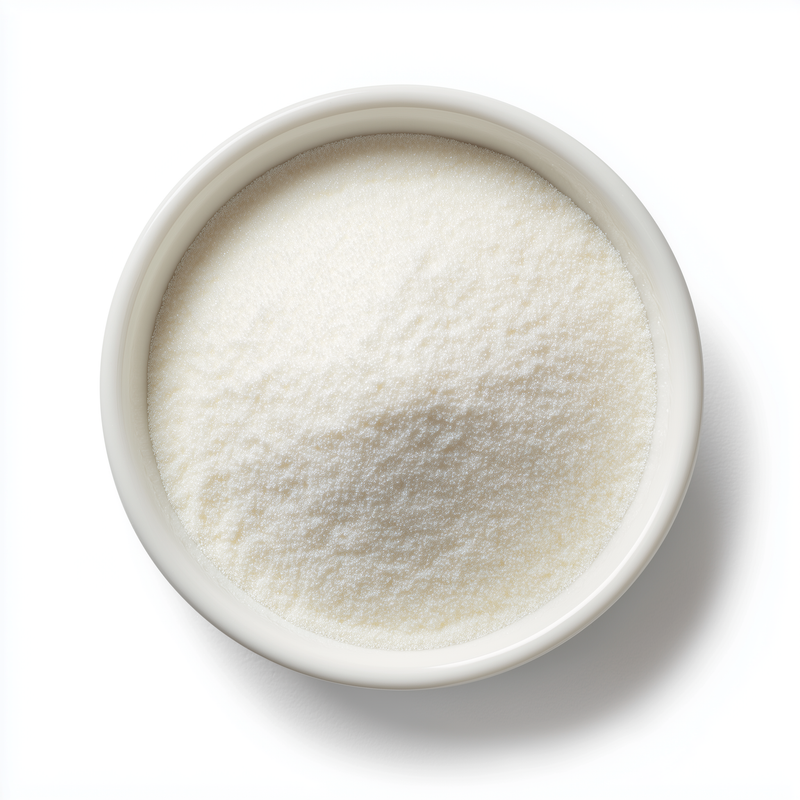
Agar-agar is a colourless, flavourless gelling agent derived from red algae known as tengusa — literally "heavenly grass" in Japanese. In the West, it has long been a staple in microbiology labs as a bacterial culture medium. Only recently has the professional kitchen community recognised it as a serious alternative to animal-derived gelatine.
The critical technical difference: agar-agar sets at 39–42°C — well above room temperature. It melts only at 82°C. Gelatine, by contrast, sets below 15°C and melts in the mouth.
What does this mean in a restaurant context?
- Heat-stable desserts — agar-based gels hold their shape in warm service environments where gelatine would collapse
- Different mouthfeel — agar produces a firmer, more brittle gel. It fractures rather than melts, creating a clean break on the palate
- Fully plant-based — an immediate solution for the growing demand for vegan and plant-forward tasting menus

2. Wakame: The Seaweed That Builds Body in Soups and Salads
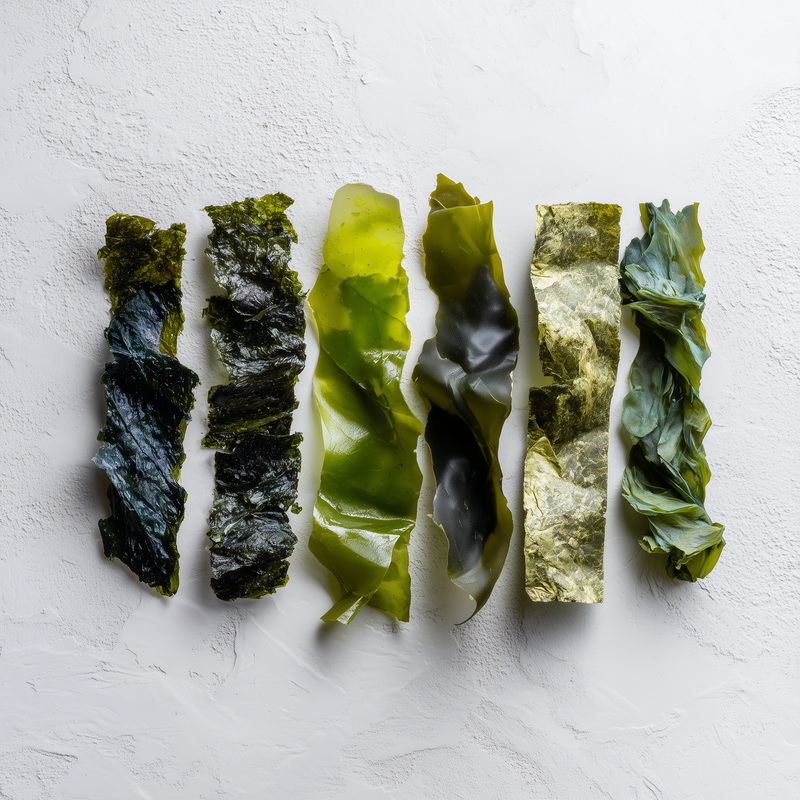
Wakame is an edible brown seaweed (Undaria pinnatifida) prized for its delicate aroma, rich mineral content, and distinctive texture. It is widely available dried in Asian grocery stores worldwide.
Rehydration technique: soak dried wakame in warm water for approximately 20 minutes. The leaves will soften and expand significantly. Trim any tough stems — the thicker parts can be fibrous if not removed during processing.
In professional kitchen applications, wakame appears in three roles:
- Soups — the classic addition to miso-shiru. A critical rule: cook for no longer than one minute. Extended boiling destroys both nutritional value and textural integrity
- Salads — a low-calorie, high-crunch base dressed with light vinegar-based sauces. The result is a salad with genuine textural complexity, comparable to fresh vegetables
- Visual composition — wakame's unusual colour and flowing shape make it a natural element in kaiseki-style presentations, valued by connoisseurs for both aesthetics and form
3. Wasabi: Not Horseradish, Not Paste — A Condiment With Its Own Logic
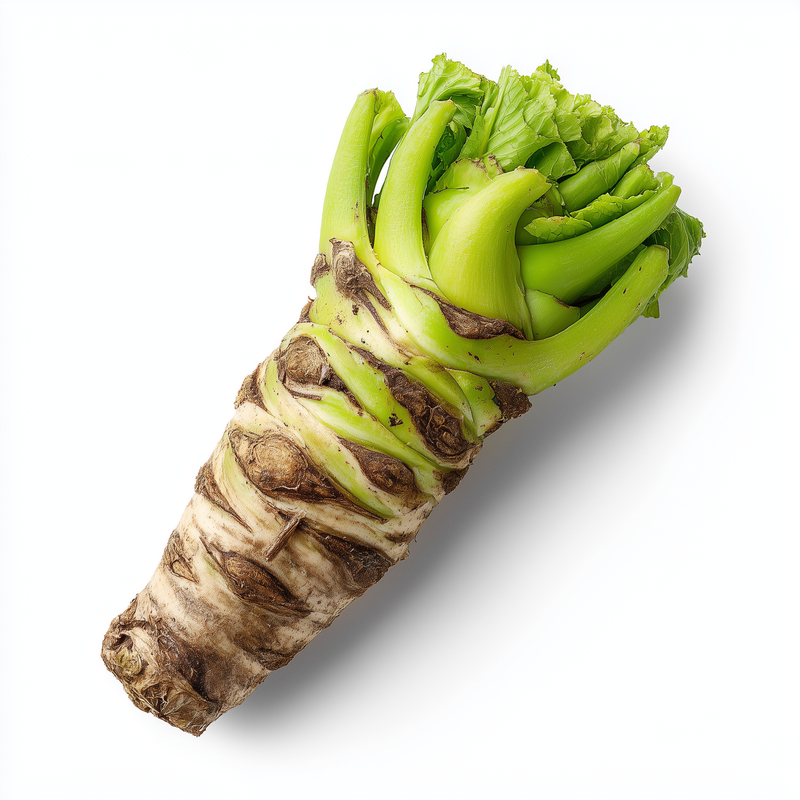
The vast majority of diners worldwide have never tasted real wasabi. What arrives in tubes and on plates is typically a compound of horseradish, green dye, and mustard powder. Authentic wasabi comes from Wasabia japonica, a plant that grows only in very specific conditions: the boggy banks of cold, clean mountain streams or irrigated terraces on hillsides.
Key sensory differences from horseradish:
- Real wasabi is more aromatic and less pungent — a fragrant heat rather than a sinus-clearing burn
- It loses intensity within 15–20 minutes of grating — which is why professional sushi chefs grate it to order, never in advance
- It is grated on a fine oroshigane (shark-skin grater) in circular motions, which releases isothiocyanates — compounds with verified antibacterial properties, critically important when serving raw protein
Outside Japan, fresh wasabi root is virtually unobtainable. Two substitutes exist in most Asian markets: wasabi powder (mix with a small amount of water and rest covered for 10 minutes to activate the aroma) and wasabi paste in tubes (ready to use, but refrigerate after opening). Neither replicates the original — but both are preferable to the green-dyed condiment passed off as wasabi in most Western restaurants.
4. Sesame (Goma): Small Seed, Transformative Impact
In Japanese cuisine, sesame — goma — is not a garnish. It is a functional flavour and aroma component, used both whole and ground. Both white and black varieties are employed, each with distinct applications.
The professional preparation sequence:
- Dry-toast in a pan — medium heat, constant agitation. Sesame seeds are ready when they begin to turn golden. Do not rely on colour alone — the difference between perfectly toasted and over-toasted is a matter of seconds, and once the oils burn, the batch is ruined
- Grind in a suribachi (Japanese mortar) — work until the seeds break into fragrant, flaky granules. The goal is coarse flakes that release aromatic oils — not a smooth paste
- Use immediately — ground sesame loses its aroma within hours. Prepare only what you need for a single service
Sesame preparation takes sixty seconds. The difference between properly toasted and straight-from-the-packet is the difference between a professional Japanese dish and a well-meaning imitation.
5. Azuki and Ao-Togarashi: The Bean and the Pepper That Break Western Assumptions
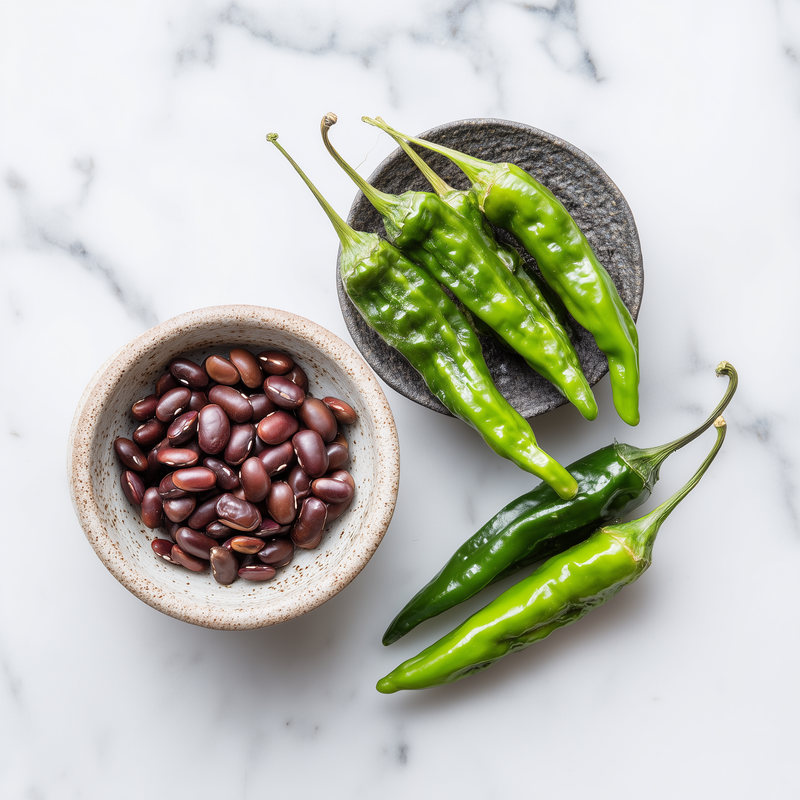
Azuki — a small red bean — is one of the cornerstones of Japanese confectionery. Cooked with sugar, it becomes an — a sweet paste that forms the base of most traditional Japanese sweets. Two forms exist: smooth koshi-an and chunky tsubushi-an.
For Western chefs, this is a conceptual shift: a bean as the foundation of a dessert, not of a main course. Azuki reframes what sweetness can be — and opens a creative pathway for original fine-dining interpretations.
Ao-togarashi — the Japanese green pepper — looks like a chilli but delivers a sweet, mild flavour. Each pod is bite-sized. In Western kitchens, it can be approximated with sweet bell pepper, seeded and cut — but the original has a subtlety that no substitute fully captures.
6. Kombu: The Seaweed That Makes Dashi Possible
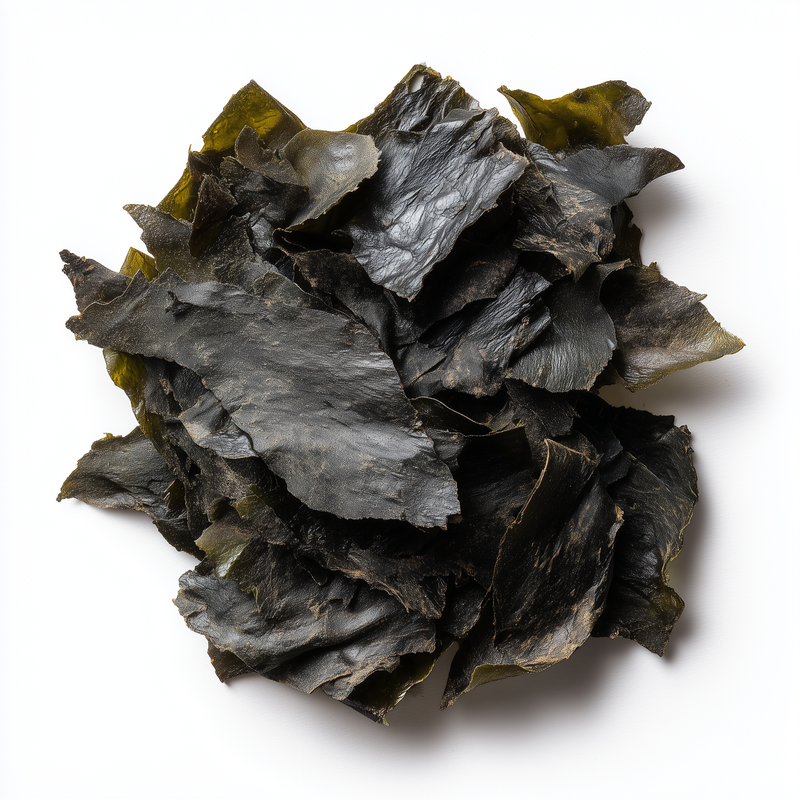
Kombu — dried kelp of the Laminariaceae family — is one of the two foundational ingredients of dashi, the stock upon which the vast majority of Japanese dishes depend. It is harvested primarily off Hokkaido, Japan's northernmost island. The dark brown sheets, 6–30 cm wide and up to several metres long, are sun-dried, cut, and packaged. A single 20–30 g piece of dried kombu yields four portions of stock.
The most important rule — and the one most frequently broken by newcomers: never wash kombu. The whitish powder on the surface is not dirt. It is concentrated natural glutamate and the source of the seaweed's entire flavour contribution. Simply wipe the kombu lightly with a damp cloth.
Some professional Japanese cooks score the kombu before cooking — shallow cuts across the surface allow glutamic acid to release more readily into the water.
Kombu is far more than a stock ingredient. It is sliced into strips and sautéed, deep-fried, or marinated in vinegar. It is processed into tororo (fine threads), oboro (broad strips), and shiraita — paper-thin squares resembling fragments of ivory silk. Shiraita functions as an edible wrapper, lending dishes a subtle oceanic undertone that no other ingredient replicates.
7. Kinoko and Kinome: The Mushrooms and Leaves That Mark the Season
Kinoko (Mushrooms)
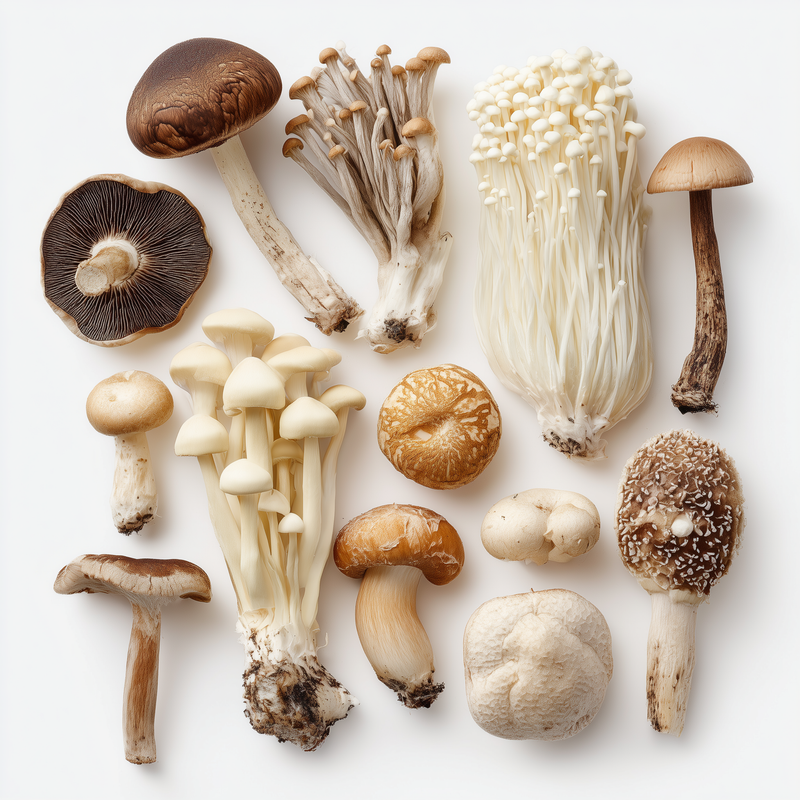
Kinoko — the edible mushrooms of Japanese cuisine — bear little resemblance to what most Western cooks stock in their walk-ins. Fortunately, as interest in Asian culinary traditions has grown, many of these varieties have become increasingly available in the West — fresh, dried, and preserved.
The critical difference in handling: Western kitchens sauté, mince, and fold mushrooms into fillings and sauces. In the Japanese tradition, mushrooms are rarely subjected to complex preparation — they are typically flash-seared at high heat, intensifying their forest aroma and delicate flavour, then added to soups and communal hotpot dishes.
The Japanese mushrooms every professional should recognise: shiitake, enoki, matsutake, nameko, and kikurage (wood ear / cloud ear fungus).
Kinome (Young Japanese Pepper Leaves)
Kinome — the tender young shoots of the Japanese prickly ash tree sanshō (Zanthoxylum piperitum). A deciduous tree reaching 2–4 metres, with thorned branches. In spring, fragrant young shoots appear, which are harvested and used both as an aromatic garnish and a vivid colour accent.
The scent of kinome is irrevocably associated with spring in the Japanese sensory vocabulary: a refreshing, faintly mint-like aroma that lifts soups, simmered dishes, grilled preparations, and tofu-based courses. Kinome is one of the most popular finishing elements in the professional Japanese chef's repertoire.
8. Konnyaku, Shirataki, and Kuzu: Japanese Thickeners and Textures
Konnyaku (Devil's Tongue Jelly)
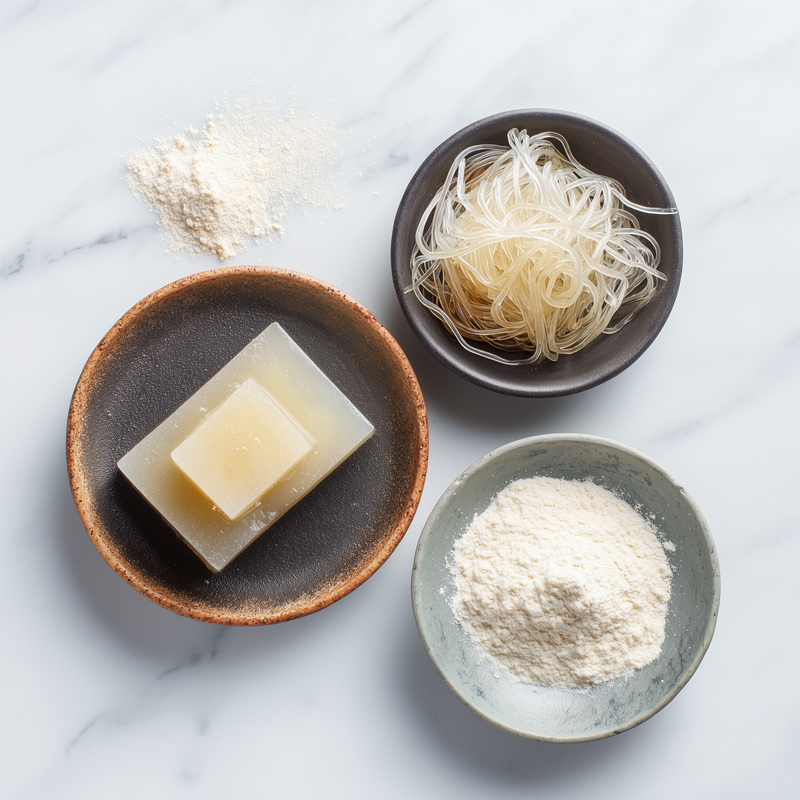
Konnyaku is made from the root of Amorphophallus konjac, commonly known as devil's tongue. The raw root never reaches the consumer — it undergoes extensive processing: peeling, boiling, grinding, mixing with a binding agent, and moulding into firm blocks. The result is a dense, resilient jelly with virtually zero calories.
Before use, konnyaku must be thoroughly boiled and drained. Boiling intensifies its aroma and firms the texture. Before adding to a dish, tear or rough-cut the konnyaku into pieces — the irregular surface absorbs sauce and seasonings far more effectively than a clean slice.
Shirataki ("white waterfall") — thin noodles made from konnyaku. Used in nabemono and hotpot dishes, they have a characteristic springy texture with almost no flavour of their own — making them an ideal vehicle for broth absorption.
Kuzu (Starch)
Kuzu — starch extracted from the root of the pueraria plant — is known in Japan both as a culinary thickener and a traditional remedy. In the professional kitchen, kuzu is a precision instrument: it creates a glossy, translucent sauce and gives soups a distinctive lacquer-like sheen.
Unlike cornstarch, kuzu has a mild, pleasant aroma and does not turn cloudy as it cools. This makes it the preferred choice for clear sauces and glazes in fine Japanese cuisine — applications where visual clarity is as important as flavour.
Three Japanese thickening agents — agar-agar, konnyaku, and kuzu — form a texture system with no Western equivalent. Each solves a different problem: agar-agar delivers a stable gel, konnyaku a resilient mass, kuzu a translucent glaze.
9. Shōga (Ginger): Three Forms of One Product
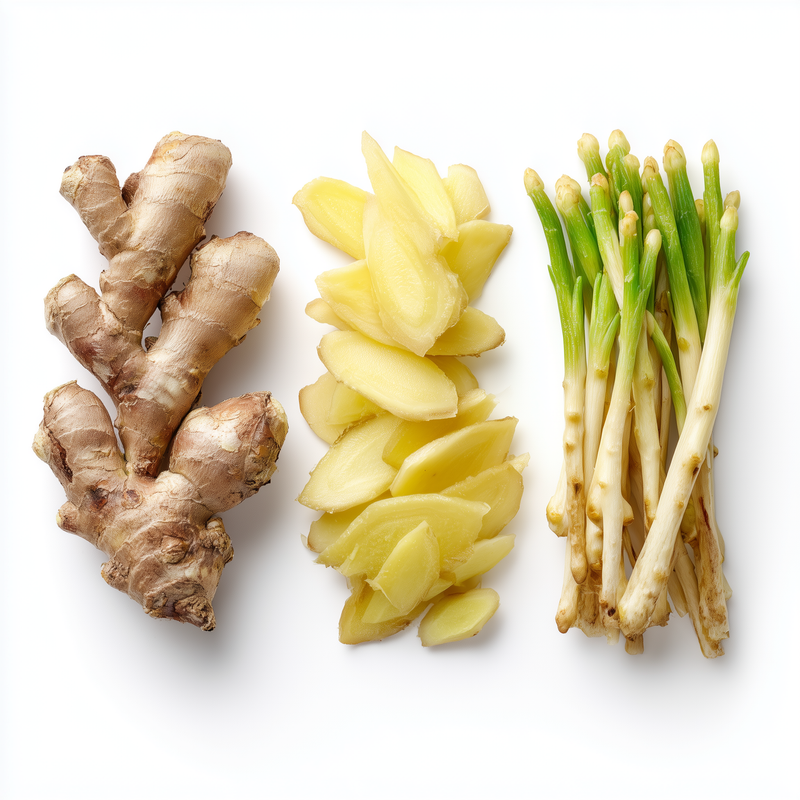
Fresh ginger is a foundational aromatic in Japanese cuisine, used in a fundamentally different way from its role in European or South Asian cooking. In the Japanese kitchen, only fresh root ginger is acceptable — never dried powder, never paste. Only the fresh root delivers the clean, sharp fragrance that Japanese flavour profiles demand.
Selection and storage:
- Choose firm, hard roots with no soft spots or shrivelled skin. Softness indicates age and flavour loss
- Peel just before use — with a spoon edge or the back of a knife, not a peeler
- Storage: up to two weeks in the refrigerator, wrapped in paper towel inside an airtight bag. Fresh ginger also freezes well — grate directly from frozen as needed
Japanese cuisine employs three distinct culinary forms of ginger:
10. Shōyu (Soy Sauce): A System, Not a Condiment
Soy sauce is not simply "the salty liquid that comes with sushi." It is one of the foundational pillars of East Asian cuisine — a product with a thousand-year history and a complex fermentation process. Primitive soy sauces emerged in Japan from observations of yeast and brine action on beans. Chinese methods arrived in the seventh to ninth centuries, but by the fifteenth century Japan had developed its own distinct variant.
How Real Soy Sauce Is Made
A blend of carefully selected soybeans, wheat, and salt is inoculated with Aspergillus mould culture. The resulting mixture — koji — is aged for three days, then combined with brine and transferred to fermentation vessels. The process takes a minimum of four to six months. The sauce is then separated from the solids and pasteurised.
Light and Dark: Two Types of One Sauce
Tamari — a thick, intensely dark liquid with a pronounced soy aroma, stronger than regular soy sauce. Produced from soybeans with minimal wheat content. In Japanese cuisine, tamari functions as a finishing drizzle or as the base for yakitori dipping sauces.
Without correctly chosen soy sauce, any attempt at Japanese cooking is fundamentally compromised. Avoid "synthetic" soy sauces — they are produced in three to four days using hydrolysed vegetable protein and hydrochloric acid instead of months of natural fermentation. The label must read "naturally brewed." Store soy sauce in the refrigerator once opened — it retains its flavour profile significantly longer.
The Takeaway: Product Knowledge Is the System
Japanese cuisine does not begin with a recipe. It begins with the product — with understanding how it behaves, what it contains, and what it demands from the cook. A Western chef who internalises this logic gains more than a set of exotic ingredients: they gain a new operating framework. Not "what to add" but "what to reveal."
That is the true value of the Japanese approach to products. Not novelty — precision.
Meta description: A professional guide to Japanese ingredients — agar-agar, wasabi, wakame, sesame, azuki. Practical knowledge for Western chefs working with Japanese flavour profiles.
Keywords: Japanese ingredients guide, agar-agar vs gelatine, real wasabi professional kitchen, wakame culinary uses, sesame goma preparation, azuki bean desserts
FAQ
What is the difference between agar-agar and gelatine? Agar-agar sets at a higher temperature (39–42°C), produces a firmer, more brittle gel, and is fully plant-based. Gelatine is more elastic but melts at room temperature. They are different products with different applications — not interchangeable substitutes.
Is real wasabi available outside Japan? Fresh wasabi root is almost impossible to source outside Japan. Most Asian grocery stores carry wasabi powder and tube paste — neither replicates the fresh product, but both are acceptable professional alternatives to horseradish-based imitations.
How should sesame be prepared for Japanese dishes? Dry-toast on medium heat with constant movement, grind immediately in a suribachi, and use within hours. Pre-ground sesame from a packet delivers a fraction of the aroma and flavour of freshly prepared goma.